
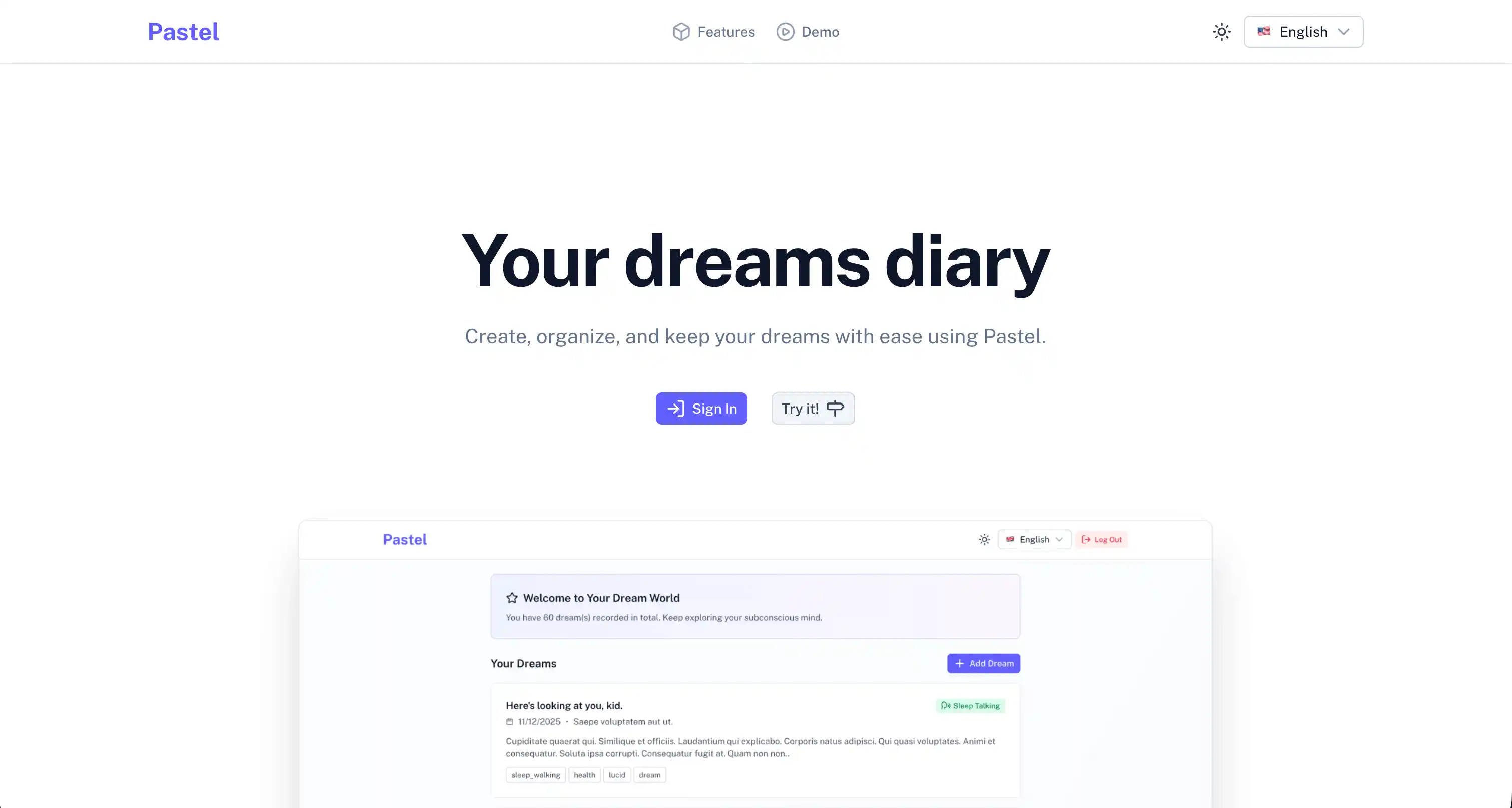
Context
The Pastel app was originally built with Svelte. To explore and master Nuxt, I undertook a complete frontend rewrite with the following goals:
- Discover Nuxt’s core features (SSR, automatic routing, modules, etc.).
- Leverage a more modular and scalable architecture for complex applications.
- Enhance performance and user experience using Nuxt’s built-in optimizations (e.g., pre-rendering, lazy loading).
Objectives
- Learning: Gain in-depth knowledge of the Nuxt ecosystem (Nuxt 4, Vue 3, Nitro, etc.).
- Migration: Translate existing business logic and UI from Svelte to Nuxt without losing functionality.
- Optimization: Utilize Nuxt’s advantages (SEO, load times, state management, etc.).
Technologies
- Framework: Nuxt 4
- Language: TypeScript
- UI: Nuxt UI (official component library)
- State Management: Pinia
- Deployment: Vercel (Nuxt-compatible)
Challenges
- Concept Adaptation: Transitioning from Svelte’s reactivity to Vue/Nuxt’s (
reactive,ref,computed). - Routing: Configuring dynamic routes and middleware to match the original app’s behavior.
- Component Library: Integrating and customizing Nuxt UI components to match the app’s design system.
- API Integration: Managing server-side API calls (via
useFetch/useAsyncData) for performance gains. - Compatibility: Ensuring third-party libraries from the original project remained functional.
Outcomes
- Fully functional application with a more maintainable and scalable architecture.
- Improved perceived performance (SSR, automatic code splitting).
- Enhanced user experience (faster load times, better accessibility).
- Consistent and modern UI thanks to Nuxt UI components.